A Career in IT (my two cents)
What a career in IT really looks like once you take off the rose-tinted glasses: the drivers of growth, a checklist for picking a direction, and an algorithm for choosing between moving up and moving sideways.
Hey everyone! Maybe we already know each other — and if not, let's fix that.
I'm Vladimir Lovtsov, an engineering team lead. I also run a small Telegram channel where I talk about careers in IT and life inside them without the rose-tinted glasses — the way I actually see it.
Today it's about careers: what a career even is, what you eat it with, and what sauce goes on top.
The moment careers come up, your head fills with images from TV shows, TikToks, YouTube videos, and books. In that picture a career is movement — either up, vertically, or sideways, horizontally — and always with a bump in income. No bump in income? Well, then something went wrong. Unless your basic needs are already covered: a home, a car. You'll object: money isn't everything, you can work just because it's interesting. Sure you can. But in IT that's rare — money matters here.
And why work at all? You close tasks, the business turns a profit, you get your cut. Until your basic needs are covered — remember Maslow's pyramid — working for food purely out of interest doesn't hold up: first you have to feed yourself. So there's our first driver — money. What else matters? You'll say: interesting tasks and projects where you grow as a specialist and raise your market value. That's the second driver. Below I'll pull together everything that pushes us up and forward as professionals.
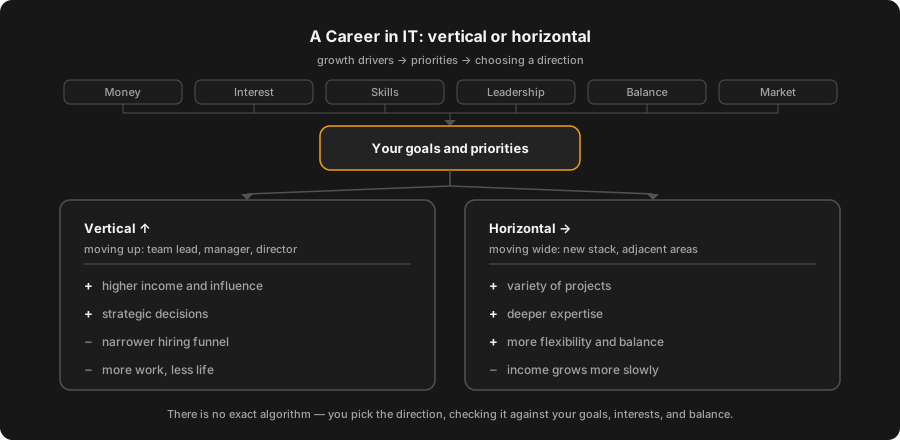
Here are the factors that most often shape an IT specialist's choices:
1. Personal interest in the tech and the projects
Example: if development genuinely excites you, take a look up the vertical — the tech lead or architect roles.
2. Professional goals or wanting a specific position
Example: if you want to run large projects, the logical step up is to become a project manager.
3. Financial motives, or just plain money
Example: the higher up the hierarchy, the higher the salary tends to be.
4. Skill development
Example: picking up a new stack is horizontal growth for the sake of new skills.
5. Leadership potential or a drive to manage
Example: if you feel pulled toward leading, going vertical into a manager role scratches that leadership itch.
6. Working on interesting projects
Example: moving into an area where they build the kind of thing that lights you up.
7. Work-life balance — so work doesn't eat your whole life
Example: a horizontal move with less responsibility often leaves more room for a life outside work.
8. Market demand
Example: a direction at peak demand means more openings and a competitive edge.
Each driver carries its own weight — it depends on your goals and priorities. Next up, a short checklist for choosing a direction.
A general career checklist
Hopefully the checklist comes in handy and helps you build your career deliberately. One caveat up front: we're all different, and some of these points may not fit your goals and circumstances — and that's fine.
1. Goals and priorities
- Figure out what you want to achieve in your career in 1, 3, and 5 years;
- Break your goals into sub-goals to make the plan more concrete;
- Decide what matters more to you: vertical or horizontal growth;
2. Self-assessment
- Take stock of your current skills — both hard and soft;
- Find your strengths and weaknesses;
- Work out which kind of work brings you the most satisfaction;
3. Learning and development
- Draw up a plan for continuous learning: courses, online resources, certifications;
- Keep an eye on trends and level up your skills to match them;
- Go to conferences and meetups — for the connections and the exchange of experience;
4. Professional brand
- Refresh your profile on relevant platforms like LinkedIn;
- Keep your resume and portfolio in shape;
- Build relationships with colleagues and industry leaders;
5. Soft skills
- Develop communication, leadership, and adaptability;
- Take on projects that call for teamwork and problem-solving;
- Never stop working on your people skills;
6. Networking
- Go to meetups, conferences, and seminars;
- Stay active in professional communities;
- Seek out mentors and learn from those with more experience;
7. Personal brand
- Start a pet project or a blog where you show what you can do;
- Share your experience and knowledge with the community;
- Mind your online image and reputation;
8. Adapting to the job market
- Study the current trends in IT;
- Stay flexible and ready for change;
- Review openings and their requirements regularly;
9. Work-life balance
- Set boundaries between work and personal life;
- Decide what your life priorities are and plan your career around them;
10. Action plan
- Put together a concrete plan based on your goals and skills;
- Set up short-term and long-term metrics to measure progress;
Now let's turn the checklist into an algorithm — one that helps you choose between the vertical and the horizontal.
The career algorithm
1. End goal
- If the goal is leadership positions and high income, go to step 2.
- If the goal is deep specialization in your field, go to step 3.
2. Vertical growth
- Assess the opportunities to move up — both inside your company and outside it;
- Figure out which skills and qualities the leadership role you want requires;
- Draw up a development plan: learning, resume update, sharpening leadership skills;
- Decide whether you're willing to put your hard skills at risk; if not — go to step 3;
- Decide whether you're ready for the narrowing hiring funnel: there are more candidates for a single manager slot than for a specialist one; if not — go to step 3;
3. Horizontal growth
- Explore the areas of IT that interest you;
- Work out which specialization is closest to your skills;
- Draw up a horizontal-growth plan: new technologies and deepening expertise;
4. Personal ambitions
- Want to lead and make strategic decisions — go vertical, but re-read step 2;
- Want a variety of projects and deep expertise — go horizontal;
5. Networking
- Think about which connections would help you move up — for instance, mentorship from a manager;
- Think about what your connections would open up on the horizontal path — for instance, taking part in different projects and teams;
6. Balance
- If balance matters to you, think about which kind of growth gives you more flexibility. And honestly: in leadership roles the scales tip toward work;
- Consider how the new role would affect your schedule and level of responsibility. Not ready to take on responsibility — then don't rush the vertical;
7. Talk to experts
- Discuss your plans with mentors and experienced colleagues, and gather their perspective and advice;
- Make your decision — based on your own analysis and those conversations.
This algorithm helps bring some order to the choice between the vertical and the horizontal. Keep your goals, interests, and circumstances in mind — and remember: no one can hand you an exact algorithm except you. If you read all the way to the end, you're awesome. Hope it was useful.
Originally published on my Telegram channel @it_underside.
Yours, DPUPP
Related Articles
Cooperative vs Employment: A Conversation the Community Was Ready to Have
Notes from conversations with RAD-KOP, a Russian cooperative IT community. Not 'here's my pitch' but 'here's where the dialogue took us': a comparison of models, real-world examples, and an honest look at the downsides.
The Value We Create — and Almost Never Keep for Ourselves
In IT we create value every single day: we fix prod, cut risk, clear out the chaos. Yet almost none of us actually owns the result. A look at an uncomfortable paradox — without the drama.
Red Flags in Hiring, Through a Lead's Eyes
Behavioral patterns in candidates I've learned to spot over years of hiring. Not an HR checklist, but the view of a manager who builds teams.